
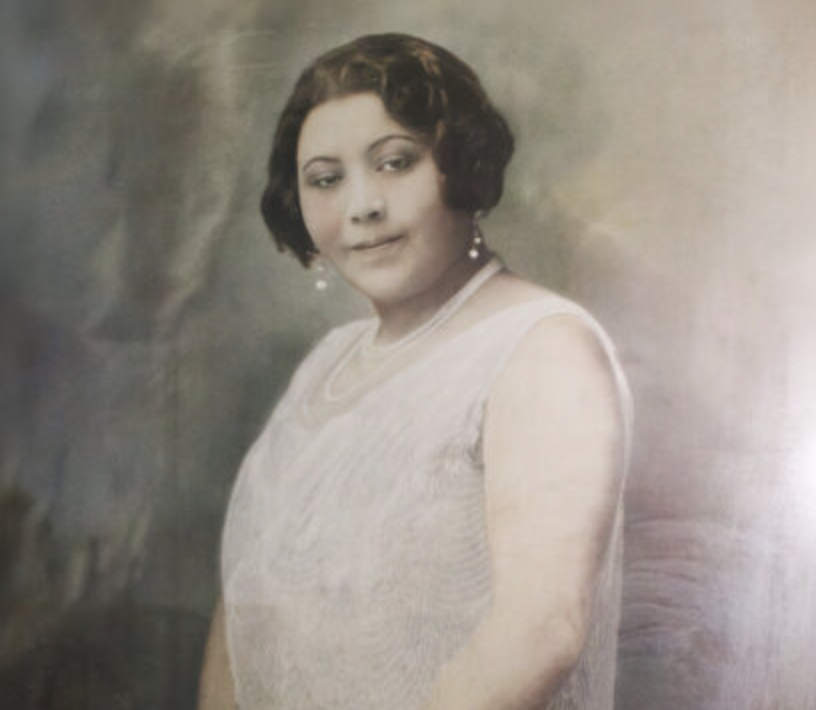
Florence Cole Talbert-McCleave was the first African American to perform the title role of Verdi’s Aida with a professional company, taking the stage in 1927 with the Chicago Folks Opera Company at a moment when the American opera world was effectively closed to Black singers at the highest level. She built an international career as a recitalist and concert soprano through the 1920s and 1930s, performed across Europe and the United States, and was hailed in the Black and mainstream press of her era as “The First Lady of Grand Opera” and “Queen of the Concert Stage.”
In 1930 she moved to Memphis after marrying Dr. Benjamin F. McCleave. From that point, she spent more than three decades shaping the next generation of Black classical singers in the South. She taught at LeMoyne-Owen College and in private studios across the city, and the singers she mentored carried her standards and her repertoire into the second half of the 20th century. Memphis became the home where her teaching legacy took root.
The Memphis Music Hall of Fame inducted Madame McCleave on November 8, 2019, recognizing a contribution that had been overdue for decades. The induction joined her name to the same list as Memphis musicians from blues, soul, gospel, hip-hop, and rock, placing her where she had always belonged: at the center of the city’s musical history.
The McCleave Project, the Opera Memphis initiative launched in fall 2017, carries her work forward. The project addresses equity and diversity in opera both on stage and in the audience, with programming, commissions, fellowships, and community partnerships. The first McCleave Fellowship was awarded to a local director, with subsequent fellowships continuing to invest in Memphis-based artists of color in opera.
Opera Memphis has built the project as a long-term commitment, not a one-season initiative. The work continues because the questions it raises are not yet answered, and because the city that hosted Madame McCleave for the second half of her life is the right place to do that work.